
What does Turkish coffee mean?
Turkish coffee describes a brewing method and a serving culture: powder-fine coffee prepared slowly in a small pot. UNESCO listed its culture and tradition in 2013. Here the name describes preparation; it does not by itself identify a particular package’s bean origin or roast level.
Separate three decisions when buying: which blend do I enjoy, do I want cardamom, and is the grind appropriate for my cezve? Answer each on its own instead of expecting one product name to settle all three.
What does ‘authentic Turkish coffee’ mean?
When people search for authentic Turkish coffee, it helps to separate the brewing tradition from the bean’s origin. UNESCO documents Turkish coffee culture and tradition, while Mehmet Efendi publishes a cezve method; neither requires one commercial blend or one bean origin.
For a traditional-style preparation, focus on powder-fine grinding, the cezve, measured water, controlled heating and unfiltered service. Sugar and cardamom remain separate choices, and the word authentic alone cannot prove a package’s quality or bean origin.
Source: UNESCO: Turkish coffee culture and tradition · Mehmet Efendi: brewing with a cezve
Grind: ask for powder-fine Turkish coffee
Turkish preparation calls for coffee ground to a very fine powder. Tell your supplier that you use a cezve: the word ‘fine’ alone may not communicate your intended method. Do not assume that a package labelled ‘espresso’ automatically has the grind you need for Turkish coffee.
If grinding at home, check whether your grinder supports this use. Keep the blend and dose unchanged while comparing grinds. For packaged ground coffee, confirm suitability before opening it so that your first attempt starts with a clear choice.
Source: Mehmet Efendi: grinding coffee
What should I prepare before heating?
Set everything out and choose the cups you will serve in. Keep within the cezve’s intended capacity and allow space for the foam to rise; split larger amounts into batches. Follow the pot and hob instructions, particularly for handles and hot surfaces.
- A cezve compatible with your hob and serving quantity, plus small serving cups.
- Turkish-ground coffee, drinking water and optional sugar to suit the person drinking it.
- A small scale if available, a water measure or cup of known capacity, and a spoon.
- A note of the blend, quantities and result. A timer can help compare attempts; it is not the sole test of when the coffee is ready.
How much coffee and water should I use?
Mehmet Efendi’s guide uses 6 g of coffee per cup of water, while its serving reference lists a 65 ml cup. We combine those in the worked example below as a starting point. Measure your own cup first: home cups vary, and the water measured before heating is not a promise of the final drink volume.
For a precise comparison, weigh the coffee instead of assuming every teaspoon holds the same amount. Choose and record sugar before brewing. The table scales ingredients only; doubling a batch does not mean doubling its heating time.
| Cups | Water before heating | Ground coffee |
|---|---|---|
| 1 | 65 ml | 6 g |
| 2 | 130 ml | 12 g |
| 3 | 195 ml | 18 g |
Source: Mehmet Efendi: brewing with a cezve · Mehmet Efendi: serving size and grounds
How to brew in a cezve
These steps paraphrase Mehmet Efendi’s method. They are not an Alagnaf-specific recipe; use the manufacturer’s instructions for an electric machine.
- Combine the measured water, coffee and optional sugar in the cezve; stir.
- Heat slowly, watching the surface until foam develops.
- Gently distribute a little foam among the cups.
- Return the cezve to the heat until the coffee rises again, then remove it and gently fill the cups.
Source: Mehmet Efendi: brewing with a cezve
Serving and sediment: what stays in the cup?
Turkish coffee is unfiltered, so grounds remain in the cup and settle at the bottom. Let them settle and sip gently instead of stirring the cup again. A layer of grounds is part of the method; its presence alone does not show that the grind or brewing was wrong.
For several cups, set them close by before lifting the cezve and watch what remains as you pour. If comparing two attempts, serve them consistently. Changing sugar or cardamom after tasting the first makes it harder to identify which change affected your preference.
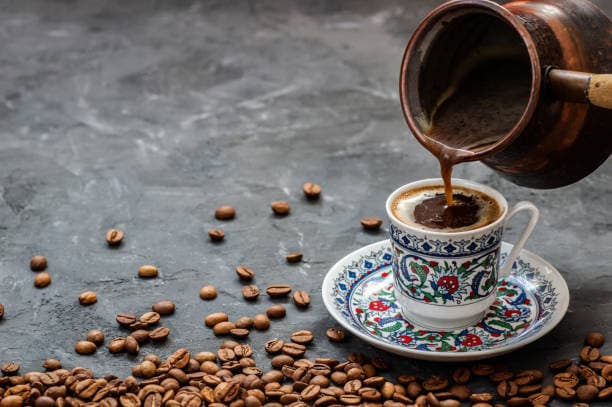
Source: Mehmet Efendi: serving size and grounds
What should I review if I dislike the result?
Use this as an order for experiments, not a definite diagnosis from appearance. Start with one observation and record what you changed. Do not judge the result by foam alone: consider how you enjoy the coffee when drinking it.
| Observation | Check first | One next experiment |
|---|---|---|
| Heavier taste than I enjoy | Did you weigh the coffee and measure the water? | Try a slightly smaller coffee dose while keeping water and other steps fixed. |
| Lighter taste than I want | Did cup capacity or water quantity change? | Return to the recorded quantities, then try a small dose increase if needed. |
| It rises before I can pour | Heat setting and cezve capacity for the batch | Try gentler heat or a smaller batch and watch it throughout. |
| I reach the sediment too soon | Pouring and stirring after serving | Pour gently and let the cup settle before sipping. |
| The result changes every time | Quantities, blend, sugar and pot | Hold these constant for two attempts before changing another variable. |
Plain coffee, cardamom and sugar are different choices
For Alkief packages, plain means the blend without added cardamom; the cardamom option includes it. Locally you may hear cardamom called habahan. ‘Plain’ on a product order does not by itself determine how much sugar goes in the cup, so specify the two preferences separately.
To compare plain and cardamom, use the same dose and cezve and keep sugar consistent. Choose the flavour you and your guests prefer. There is no need to change your coffee or sugar quantity simply because you selected the cardamom option.
How should I order from Alagnaf Coffee?
Begin with your preparation method: ‘I brew Turkish coffee in a cezve on the hob and prefer plain coffee or cardamom.’ Then say whether you want coffee by weight or a ready package. The range page describes the blends and the Alkief page lists its 125 g and 250 g packages. Confirm the product choice and grind with the team before completing the order.
If you are undecided, arrange a small trial before a larger order. Explain what you disliked about your previous cup: the cardamom flavour, the coffee quantity or its texture? Those details are more useful than asking only for ‘stronger coffee’, which can mean different things to different people.
After the trial: storage and regular hospitality
When you enjoy a result, keep the note alongside the blend, dose and cup capacity. Start the next package with that recorded method before changing it. Choose a pack size around actual use, then visit the storage guide to organise where it lives and how you close it after use.
For an office or hospitality routine, record sugar and cardamom preferences, equipment and cups per batch. Try the method with the person who will usually make the coffee before arranging repeated supply, then discuss order size and frequency with the team.
Common questions when starting
Do I need cardamom? No: choosing plain or cardamom is separate from choosing cezve preparation. In Libya, habahan is another common name for cardamom. Can I use a spoon instead of a scale? Yes, but treat it as your own measure and keep the spoon and the way you fill it consistent; do not assume its volume gives an exact weight.
Is Turkish coffee with milk the traditional reference method? The traditional reference used here is water-based; milk versions are variations rather than the method described in this pillar. Can I follow these steps in an electric machine? Follow your machine’s capacity, dose and programme instructions. Will any ground coffee work? Confirm that it is suitable for Turkish preparation; the blend’s name or the coffee’s colour does not tell you that on its own.